

As part of the Erasmus+ project RESILIENT VOICES, the German Committee for Disaster Reduction and the French organization Auxilia are working together to strengthen the inclusion of vulnerable groups in disaster preparedness. The project aims to better understand the challenges that different population groups face before, during, and after disasters, and to explore how risk communication and preparedness measures can be made more inclusive.
Following successful focus group discussions with residents of Lebenshilfe Buxtehude and participants of a German language support course at VHS Buxtehude, another discussion was held in mid-June with ten senior women from Buxtehude. Like the previous participants, the senior women were very willing to contribute their experiences and perspectives.
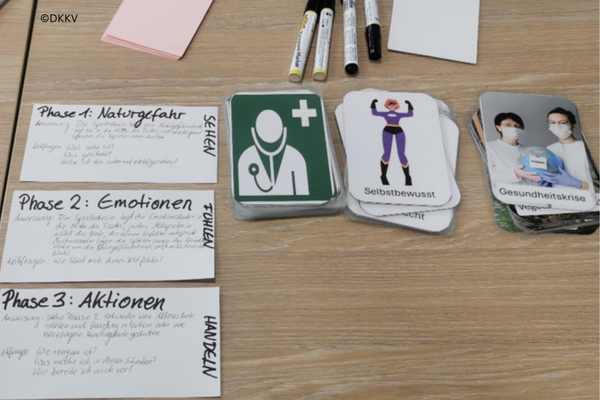
The focus group also featured the serious game “See. Feel. Act. – An Inclusive Game for Disaster Preparedness.” This cooperative game supports discussion through illustrated cards and provides an accessible introduction to the topic of disaster preparedness. In the first phase, participants discuss natural hazards using situation cards. They then reflect on their emotions related to these situations before jointly developing possible actions in a third phase that help strengthen positive emotions and preparedness. Participants particularly appreciated the opportunity to contribute their own ideas and create additional action cards. Based on these discussions, previously expressed emotions were revisited and reassessed. The game helped participants engage with the topic, highlighted different experiences, and encouraged open dialogue.
The discussion revealed that many participants had already experienced natural hazards personally. Several reported incidents of heavy rainfall that flooded basements or storms that damaged roofs. Particularly striking were the memories of some participants who had experienced the 1962 North Sea flood as children. These experiences were associated with fear and uncertainty, including memories that “water was everywhere” and that there was “too little information available” at the time. At the same time, many remembered a strong sense of community and the remarkable solidarity people showed during the crisis.
Compared to the other focus groups, the themes of self-help and neighbourly support played the most important role among the senior women. Many emphasized how important it is for people to support one another and to know whom they can turn to in an emergency. At the same time, participants highlighted the need for more adaptation measures in public spaces, particularly in response to increasing heatwaves. Suggestions included additional shaded areas, access to drinking water, and cooler public spaces that are accessible for people using walkers or wheelchairs.
Many participants reported that the discussion itself provided them with new ideas and information about disaster preparedness. Most importantly, they appreciated that their experiences and needs are being considered and should play a greater role in future preparedness planning.
The findings from all three focus groups demonstrate the value of involving diverse population groups in effective disaster preparedness. People with disabilities, migrants, and senior citizens all bring unique experiences, knowledge, and perspectives that should be reflected more strongly in planning processes. The insights gathered during the discussions will now contribute to the next stages of the project. The overall goal remains to work together with local authorities, social service providers, associations, and residents to create a more inclusive, practical, and resilient approach to disaster preparedness in Buxtehude.
(Image Source: DKKV)