

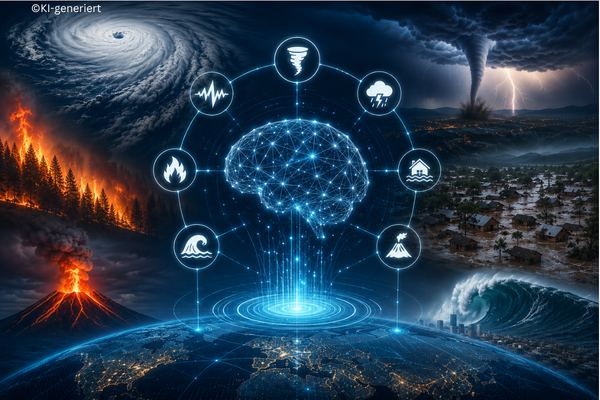
A new report by UNDRR, WMO, ITU, and IFRC examines how artificial intelligence (AI) can contribute to the further development of multi-hazard early warning systems (MHEWS).
The report analyzes current applications of AI across all four pillars of early warning systems and highlights areas where AI can add value—for example, through faster analysis, greater data processing capabilities, and support for decision-making.
At the same time, the report emphasizes that AI must be understood as a supporting technology. Its successful application requires a robust observation infrastructure, clear governance structures, human oversight of safety-critical decisions, and a human-centered and inclusive design.
Key recommendations for action include expanding data and measurement infrastructures, developing interoperable systems, making long-term investments, and fostering collaboration among governments, research institutions, the private sector, and other stakeholders.
More information and the full report can be found here.
(Image source: AI-generated)