

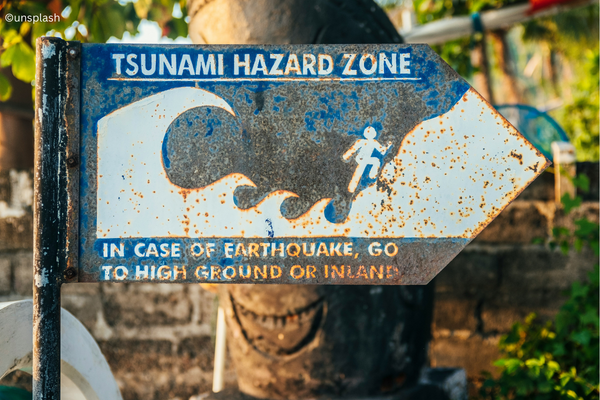
On March 11, 2011, a magnitude 9.0 undersea earthquake struck the east coast of Japan. The quake triggered a devastating tsunami that destroyed large parts of the coastal region and ultimately led to the nuclear disaster at the Fukushima Daiichi nuclear power plant. The event is considered the most serious nuclear accident since Chernobyl and illustrates the far-reaching consequences of a chain of events involving earthquakes, tsunamis, and reactor accidents.
A total of around 19,000 people were killed or are missing as a result of the earthquake and tsunami, in addition to numerous indirect deaths resulting from evacuations and long-term stress on the population.
The economic damage was enormous: estimates range from over 200 to 235 billion US dollars, making the event one of the most expensive disasters in history.
Fukushima exemplifies the cascade effects of modern disasters: a natural event triggered a technological catastrophe whose consequences extended far beyond the immediate region. Radioactive substances entered the air and sea, large areas had to be evacuated, and tens of thousands of people lost their homes permanently.
The disaster sparked intense debate around the world about the risks of nuclear energy. In Germany, it accelerated the already discussed phase-out of nuclear energy, which was politically re-decided and fully implemented in the following years until 2023. At the same time, Fukushima showed that even in highly industrialized and technically well-prepared societies, residual risks can never be completely ruled out.
Even 15 years later, Fukushima therefore remains a central point of reference for discussions on risk assessment, disaster preparedness, and dealing with complex, interrelated risks.
You can find more information here:
https://www.lpb-bw.de/fukushima
(Image source: unsplash)