

Risks and disasters, and their resulting impacts, are becoming increasingly frequent and complex due to a range of developments such as climate change, geopolitical instability, and ongoing urbanisation. As a result, there is a growing demand for well-trained professionals in Disaster Management and Civil Protection. This need is also reflected at policy level, for example in the Preparedness Union Strategy, where Key Action 15 highlights the importance of integrating preparedness into education and training systems.
In response to this demand, the 2-year (2024-2025) EUMA project (Creating a European Higher Education Network for Master’s Programmes in Disaster Risk Management) funded by the European Commission (DG ECHO) has established a new postgraduate Master’s programme entitled “International Disaster Management and Civil Protection” The programme is hosted by the Postgraduate Center of the University of Vienna, Austria, and is delivered in cooperation with several partner universities across Europe, such as the University of Bonn, University of Twente, Dublin City University, the Scuola Superiore Sant Anna in Pisa, and the Estonian Academy for Security Sciences.
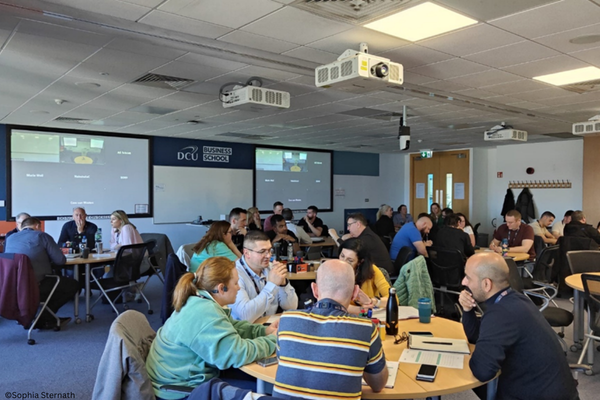
The programme provides a mix of blended learning, excursions, exercises and simulations, and peer learning to effectively bridge theory and practice. A strong emphasis is placed on the bilateral exchange of knowledge and experiences between participants and lecturers. While most teaching units take place online on extended weekends, the curriculum also includes four one-week in-person modules held in Vienna (AT), Pisa (IT), Dublin (IE), and Enschede (NL). These on-site blocks are designed to foster personal interaction and networking among participants. Thanks to this structure, the postgraduate Master’s programme can be completed alongside professional commitments.
In addition to the full Master’s degree, participants may also enroll in individual modules, offering a flexible way to explore the programme through micro-credentials. These micro-credentials can later be credited toward the full degree. Furthermore, an Academic Expert programme is available, which omits the scientific thesis component.
Graduates of the postgraduate Master’s programme have a comprehensive and holistic understanding of the disaster management cycle and are capable of applying theory in real-world situations. They are well equipped to anticipate emerging crises and to respond effectively to disasters across borders and sectors.
More information on the Master’s programme as well as the registration can be found here.
(Image source: Sophia Sternath)