

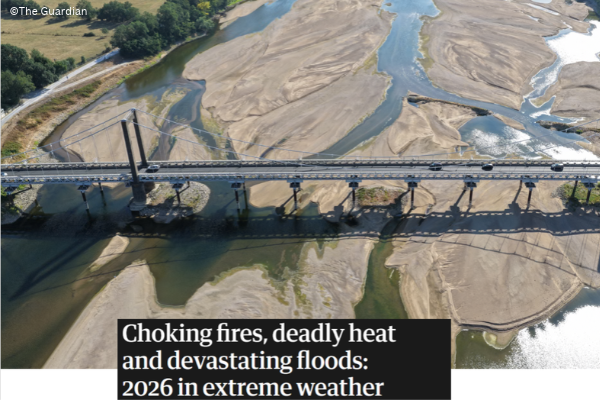
A review by The Guardian highlights the scale of extreme weather events that have affected communities around the world throughout 2026 so far. Following the hottest summer globally since records began in 1850, the year has been marked by droughts, wildfires, heatwaves and devastating floods. According to the article, the death toll from extreme weather has already reached the high tens of thousands – a preliminary and conservative estimate.
The events documented illustrate the global scale of climate-related risks. While extreme heat and wildfires have affected Australia, North America and Europe, heavy rainfall and flooding have caused numerous fatalities and widespread damage in Brazil, East Africa and parts of Asia. In Europe alone, approximately 686,000 hectares burned in July – around twice the average of the previous 20 years. Furthermore, extreme summer heat is estimated to have caused 50,000 deaths in European cities.
The review highlights the close links between climate change and disaster risks. The increasing intensity and frequency of extreme weather events pose growing challenges to societies worldwide. To effectively address these developments in the long term, climate action must be implemented consistently on a global scale. It is a shared responsibility at every level – from local communities and municipalities to national governments and international cooperation. Everyone must contribute, including policymakers, businesses and society as a whole. This responsibility also extends to the super-rich, who must play their part and use their considerable resources and influence to support climate action. At the same time, forward-looking risk assessments, effective early warning systems and climate-resilient infrastructure are becoming increasingly important, particularly to protect the most vulnerable communities.
If you are interessted in the topic visist also our natural hazard site.
The full overview, including further events and illustrative monthly graphics can be found here.