

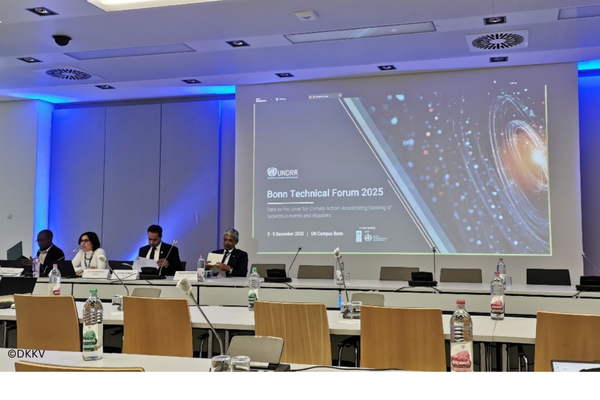
From 3–5 December 2025, the Bonn Technical Forum convened global experts at the UN Campus in Bonn under the theme “Data as the Lever for Climate Action – Accelerating Tracking of Hazardous Events and Disasters.” The event, organized in partnership with UNDRR, UNDP, and WMO, focused on strengthening disaster-related data ecosystems to support risk-informed development and climate resilience.
The Forum highlighted the critical role of accessible, reliable, and disaggregated data on losses and damages for guiding adaptation strategies, mobilizing finance, and reporting progress under global frameworks such as the Paris Agreement and the Sendai Framework. Central to the discussions was DELTA Resilience, the next-generation disaster-tracking system designed to enable interoperable, quality-assured data across sectors and administrative levels.
Participants explored methodologies, standards, and tools for capturing and analyzing hazardous events and associated losses. Sessions ranged from user journeys for data collection and analysis, data ecosystem maturity assessments, and methodological foundations for tracking losses and damages, to country rollout strategies and regional approaches for institutionalization.
On behalf of the AHEAD Project (Advanced disaster damage and loss data information system for enHancEd impAct-baseD knowledge), Ronja Winkhardt-Enz (DKKV) actively participated in the Forum. AHEAD is particularly interested in the methodological discussions presented during sessions such as the Expert Panel on Methodological Basis for Tracking and Analyzing Losses and Damages and Data Quality for Hazardous Events, as these insights will inform the development of AHEAD’s information system. The project aims to integrate user needs, standards, and best practices to enhance impact-based knowledge for disaster risk reduction and climate adaptation.
The Forum concluded with a clear roadmap for accelerating the rollout of DELTA Resilience, strengthening national capacities, and fostering partnerships to institutionalize disaster tracking systems globally. These outcomes will serve as a valuable reference for AHEAD and similar initiatives striving to improve disaster data systems and methodologies.
(image source: DKKV)