
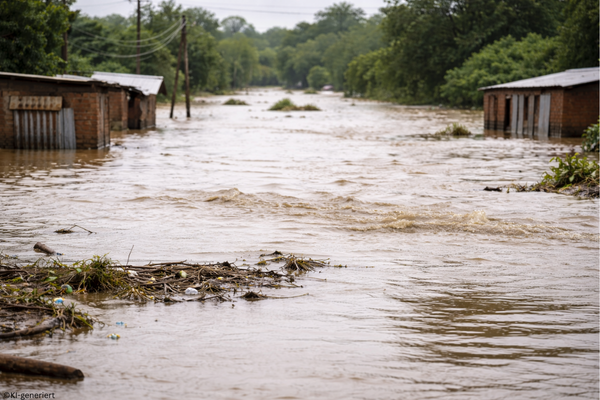
In recent weeks, exceptionally heavy and persistent rainfall has flooded large parts of southern Africa. Mozambique and north-eastern South Africa have been particularly hard hit, but Zimbabwe and other countries in the region are also reporting severe damage.
According to the United Nations, more than half a million people have been affected by the floods in Mozambique alone. Over 100 deaths have been reported, and numerous people are still missing. Tens of thousands have had to leave their homes and are living in temporary accommodation. In South Africa, too, a national state of disaster has been declared following severe damage to infrastructure and residential buildings.
In addition to considerable damage to roads, bridges, power lines and water pipes, large areas of agricultural land have also been affected. In Mozambique, thousands of buildings have been destroyed, health facilities damaged and large parts of the harvests destroyed. The most important transport links have been partially interrupted, which is making humanitarian aid even more difficult.
Meteorological and climatological assessments indicate that the extreme rainfall is exacerbated by global warming. At the same time, the La Niña weather phenomenon is currently increasing the intensity and duration of rainfall in the region. This makes extreme events such as heavy rain and flooding more likely and potentially more consequential, especially in vulnerable regions with limited infrastructure and financial resources.
These events once again highlight the importance of proactive disaster prevention, resilient infrastructure and stronger international support for particularly affected regions. The situation remains tense, as further rainfall is forecast and many rivers continue to flood.
Further information is available here and here.
(Image source: AI-generated)