

Newsblog
Page 2 of 20
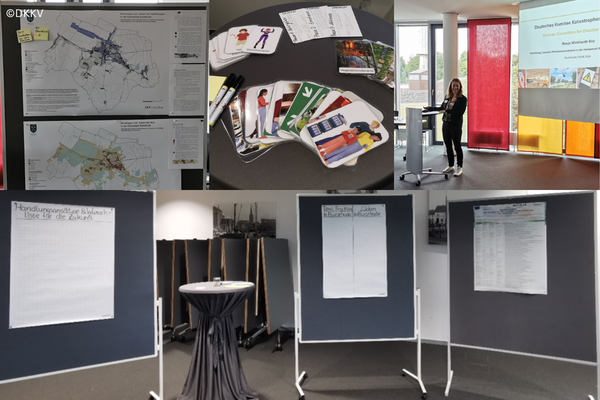
Expert Dialogue in Buxtehude: Working Together for Inclusive Risk Communication and Disaster Preparedness
How can warnings, information, and preventive measures be designed to reach everyone? This question was the focus of the expert dialogue “How Can We Make Risk Communication in the Hanseatic City of Buxtehude More Inclusive?,” which took place on August 19 at the Buxtehude Town Hall. The event was organized by the DKKV as part […]

New project launched: SEKTOR-X-NET
The DKKV, in collaboration with TH Köln, has launched the new accompanying project SEKTOR-X-NET. The project supports the funding scheme ‘Cross-sectoral measures for resilient supply’ of the Federal Ministry of Research, Technology and Space (BMFTR) and will facilitate the exchange and transfer of knowledge between the funded research projects in the coming years. The aim […]
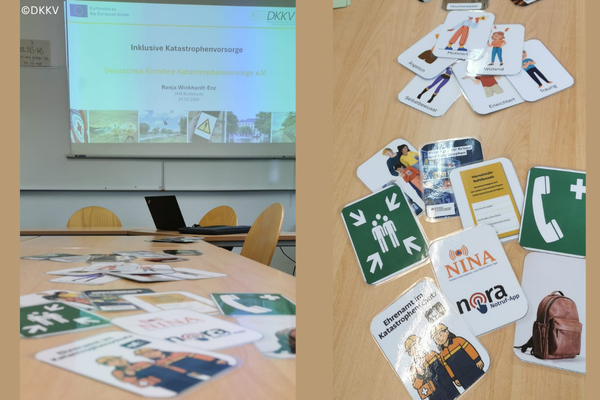
DKKV Featured with a Special Article in the Latest Issue of “IRDR Highlights”
The German Committee for Disaster Reduction (DKKV) is featured in the latest issue of the international magazine IRDR Highlights, published by the Integrated Research on Disaster Risk (IRDR) initiative, with a technical article. Under the title “Beyond the Message: Why Risk Communication Must Build a Shared Risk Culture,” the DKKV demonstrates how effective risk communication […]

Call for Contributions: Submit to the 3rd Volume of SURE Solutions
The SURE Solutions publication series has launched its Call for Contributions for the third volume. Researchers, practitioners, and project partners are invited to submit articles showcasing innovative approaches, lessons learned, and practical experiences related to sustainable urban development. The publication provides a platform for sharing knowledge and promoting dialogue between research, policy, and practice. Contributions […]

Leveraging AI to enhance multi-hazard early warning systems
A new report by UNDRR, WMO, ITU, and IFRC examines how artificial intelligence (AI) can contribute to the further development of multi-hazard early warning systems (MHEWS). The report analyzes current applications of AI across all four pillars of early warning systems and highlights areas where AI can add value—for example, through faster analysis, greater data […]
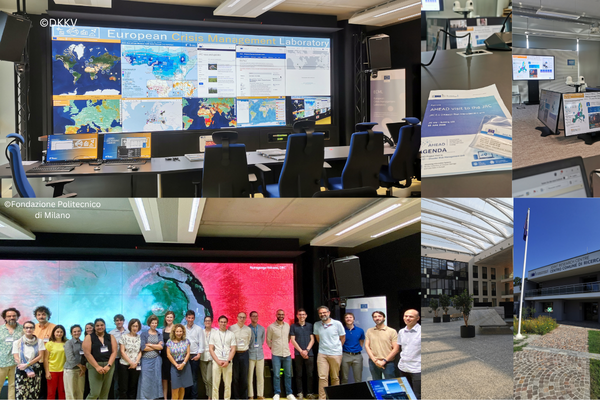
AHEAD Consortium Meets in Milan and Ispra to Advance the Disaster Loss Data Information System
22–24 June 2026 | Milan & Ispra, Italy From 22 to 24 June 2026, partners of the AHEAD project (Advanced disaster damage and loss data information system for enHancEd impAct-baseD knowledge) gathered in Milan and Ispra for a three-day consortium meeting to assess progress, strengthen collaboration, and prepare the final phase of the project. Hosted […]

CEDIM presents DFA Task Force report on the June heatwave
The heatwave in June 2026 ranks among the most exceptional heat events ever observed in Europe. Between 13 and 29 June, it was felt across large parts of western, central and southern Europe and was accompanied by record-breaking daytime temperatures, exceptionally warm nights and prolonged exposure to heat. This report examines the meteorological causes of […]
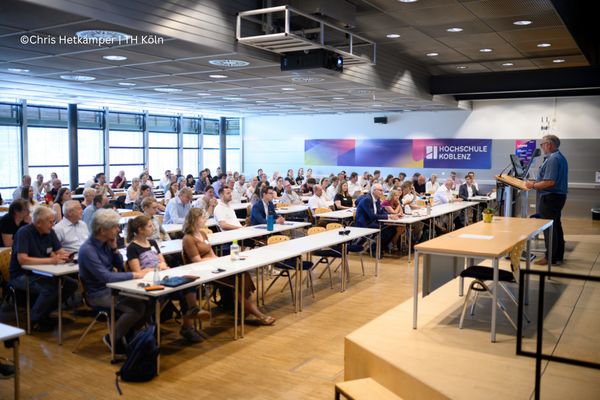
Five Years After the 2021 Flood—Changing Research Perspectives
From July 2 to 4, 2026, the conference “Five Years After the 2021 Flood—Changing Research Perspectives” took place on the Remagen campus. Together with numerous partner institutions from academia, the professional sector, and disaster preparedness, participants reflected on the lessons learned from the 2021 flood disaster and presented perspectives for a more resilient future. The […]
World Bank: Disasters Jeopardize About 90 Million Jobs Annually
A recent World Bank analysis shows that natural disasters and extreme heat cost the world about 90 million full-time job equivalents each year. Workers in agriculture, construction, and other climate-sensitive sectors are particularly affected. In addition to the direct damage caused by floods, storms, or earthquakes, extreme heat in particular is having an increasing impact […]