

The DKKV is…
German Committee for Disaster Reduction e.V. (ger.: Deutsches Komitee Katastrophenvorsorge e.V.)
Newsblog
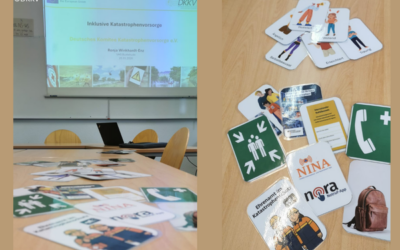
“See. Feel. Act. – An Inclusive Game for Disaster Preparedness”
As part of the Resilient Voices project, two focus group discussions were conducted in Buxtehude in mid-May, each involving eight participants: one with residents of Lebenshilfe Buxtehude and one with participants of a DeuFö B2 language course at the VHS Buxtehude....
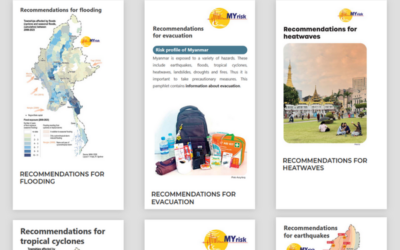
MYrisk Flyers Now Also Available at the German Embassy in Myanmar
The MYrisk flyers on disaster preparedness are now also available to the public at the German Embassy in Yangon (Myanmar). This makes important information on risks, preparedness, and how to respond in the event of a disaster even more widely accessible. The...

Activities Report 2025 Now Also Available in English
An eventful year lies behind us: With the Activities Report 2025, DKKV provides a comprehensive overview of its activities, events, and developments over the past year – now also available in English. Structured around DKKV’s three core areas of work – fostering...

Survey by the WCRP Global South Inclusion Task Team
The WCRP Global South Inclusion Task Team (GSITT) is conducting an anonymous survey regarding its events. Anyone who has previously participated in WCRP events or projects is eligible to participate. The goal is to identify barriers and enablers for better and more...
Follow us
What is disaster risk reduction?
Storms, natural hazards and extreme events can quickly become a danger to people and the environment. But climate change, extreme urbanisation, power outages and fires also offer potential hazards.
A disaster occurs when the functioning of a community or society is impaired or interrupted and, as a result, high human, material, economic and ecological losses occur that cannot be managed alone.
Precautionary measures can help to reduce the consequences and impact of the disaster. Depending on the hazard and personal circumstances, the precautionary measures to be taken may vary.
Find out more about potential hazards and individual precautionary measures on our topic pages.