

The DKKV is…
German Committee for Disaster Reduction e.V. (ger.: Deutsches Komitee Katastrophenvorsorge e.V.)
Newsblog
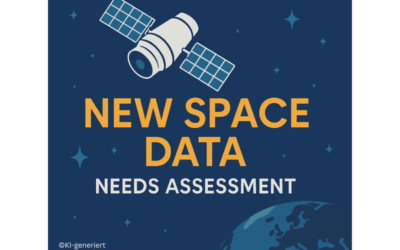
DLR launches survey on demand for New Space data
The German Space Agency at DLR is inviting scientific institutions in Germany to participate in a survey on the demand for commercial “New Space” satellite data. The aim is to facilitate access to innovative satellite data for research, development, and teaching...
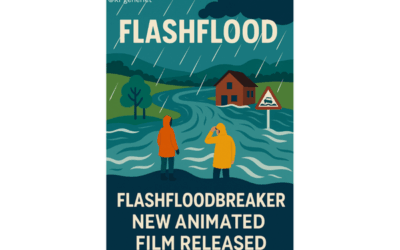
FlashFloodBreaker Project released animated film
The FlashFloodBreaker project is pleased to announce the release of a new animated film produced by Just Julie. The film vividly presents the partnership and objectives of the project, illustrating how innovative measures can help protect against flash floods. The...
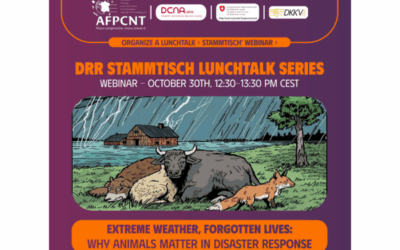
DRR Stammtisch Lunchtalk Series – 30th October, 12:30 – 13:30 Pm
On October 30th, 2025, from 12:30 to 13:30 (CEST), the next session of the DRR Stammtisch Lunchtalk Series will take place. The webinar is titled Extreme Weather, Forgotten Lives: Why Animals Matter in Disaster Response. Extreme weather events are increasing worldwide...
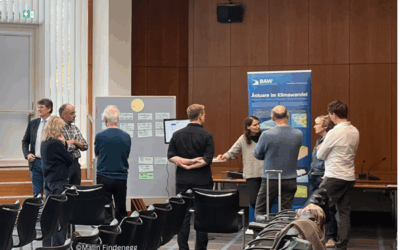
BMV Research Network: Workshop on Climate Adaptation – From Research to Application
On October 20 and 21, the DKKV participated in the application workshop “Climate Adaptation – From Research to Application” in Bonn. The event was jointly organized by the Federal Ministry for Digital and Transport, the BMV Research Network, and the DAS Basic Service....
Follow us
What is disaster risk reduction?
Storms, natural hazards and extreme events can quickly become a danger to people and the environment. But climate change, extreme urbanisation, power outages and fires also offer potential hazards.
A disaster occurs when the functioning of a community or society is impaired or interrupted and, as a result, high human, material, economic and ecological losses occur that cannot be managed alone.
Precautionary measures can help to reduce the consequences and impact of the disaster. Depending on the hazard and personal circumstances, the precautionary measures to be taken may vary.
Find out more about potential hazards and individual precautionary measures on our topic pages.