

Historical Events
From century floods and asteroid impacts to volcanic eruptions that altered the Earth’s atmosphere and, consequently, its climatic conditions. This page highlights events that either led to a disaster in their own right or resulted directly in a disaster. The aim is to illustrate how serious natural hazards, diseases and other factors can affect the Earth on both a social and ecological level.
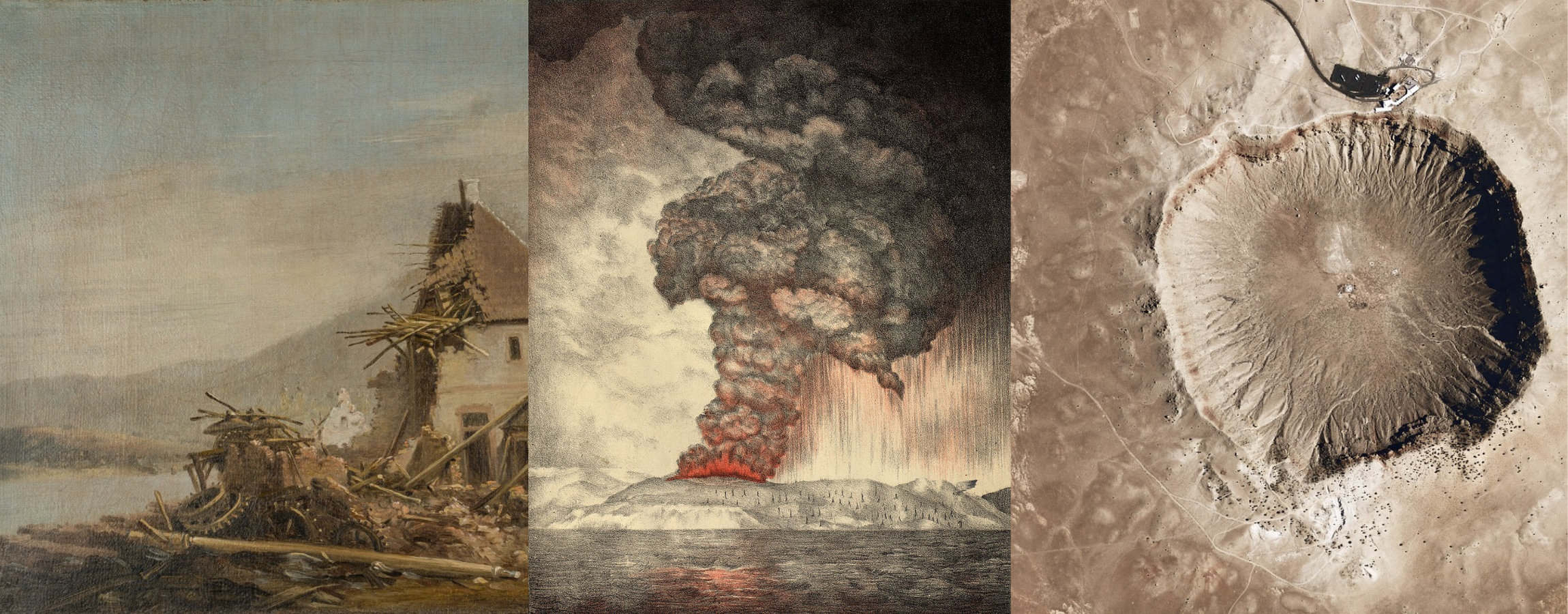
© l: Wikipedia | m: Wikipedia | r: Pixabay
Why historical events are relevant
Historical events provide key opportunities to learn how to manage risks. They demonstrate how dangers arise from the interplay of multiple factors and can develop dynamically.
What we can learn from them
At the same time, they highlight where societal vulnerabilities lie – for example, in infrastructure, communication or organisation – and what knock-on effects these can have.
The role they play in today’s risks
Analysing past events therefore helps us to better understand today’s risks and to further develop approaches to prevention, preparedness and resilience.
Historical Events
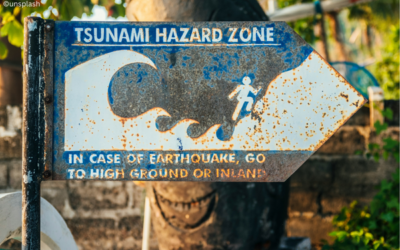
15 years after Fukushima
On March 11, 2011, a magnitude 9.0 undersea earthquake struck the east coast of Japan. The quake triggered a devastating tsunami that destroyed large parts of the coastal region and ultimately led to the nuclear disaster at the Fukushima Daiichi nuclear power plant....