

Turin, 4–6 November 2025 — The EU Science for Preparedness Conference brought together leading experts from across Europe to explore how science, innovation, and collaboration can strengthen the continent’s ability to anticipate and respond to crises. Hosted by the European Commission’s Joint Research Centre (JRC) and the Copernicus Emergency Management Service, the event featured keynote speeches, panel discussions, and interactive workshops focused on early-warning systems, risk and impact modelling, exposure mapping, and resilience planning.
A key theme of the conference was the integration of scientific knowledge into operational crisis preparedness strategies, aligning with the goals of the EU’s Preparedness Union Strategy. The event served as a platform for sharing best practices, testing new tools, and fostering cross-sector collaboration among scientists, policymakers, and emergency responders.
The conference was particularly significant for the AHEAD (Advanced disaster damage and loss data information system for enHancEd impAct-baseD knowledge) project. AHEAD aims to develop a comprehensive, geolocated information system for post-disaster damage and loss data across Europe. This system will support evidence-based decision-making for disaster risk reduction, climate adaptation, and financial compensation mechanisms, including Solidarity Fund requests and insurance claims.
By enabling detailed data modelling for sectors such as cultural heritage, waste and water systems, and natural ecosystems, AHEAD contributes directly to the EU’s ambition of building a more resilient and data-informed society. The conference provided an ideal venue to align AHEAD’s objectives with broader EU preparedness efforts and to engage stakeholders in co-developing and testing the system.
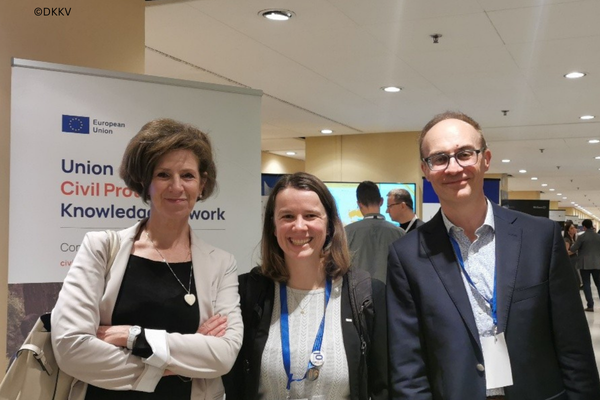
Ronja Winkhardt-Enz participated in the conference for DKKV, next to the project partners from POLIMI and AFPCNT, contributing to discussions on data-driven disaster risk management and the role of different stakeholders in shaping resilient futures.
(image source: DKKV)