

Disaster Waste Management
Disaster waste is far more than just a logistical problem: its presence affects virtually every aspect of emergency response and reconstruction. This page explains what disaster waste management (DWM) is, what happens during the various phases of DWM, and what challenges it presents. The information is supported by a case study on the flood disaster in the Ahr Valley.
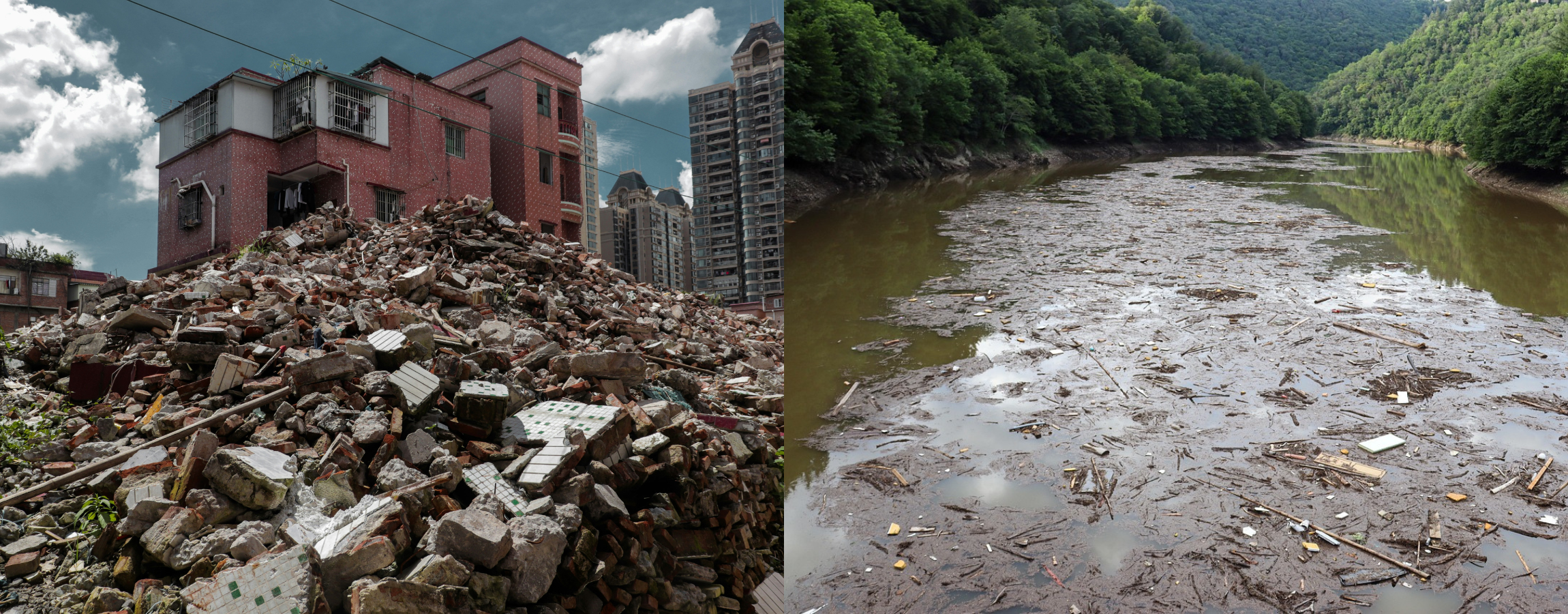
© l.:unsplash | r.:pixabay
What is Disaster Waste Management?
Disaster Waste Management (DWM) is a critical component of overall disaster management, dealing with the management of the sometimes enormous volumes of waste generated by natural events (such as earthquakes, floods and hurricanes) or man-made disasters (such as conflicts or industrial accidents). For example, roads blocked by waste can prevent emergency services from reaching survivors. Similarly, unmanaged waste piles can pose acute health and environmental risks (Brown et al., 2011). The aim of DWM is therefore to accelerate the post-disaster reconstruction process and minimise risks to human health and the environment.
Effective disaster waste management contributes to the long-term resilience of affected communities, conserves resources and enables the value contained in the waste to be utilised, for example through reuse and recycling (Caldera et al., 2025).
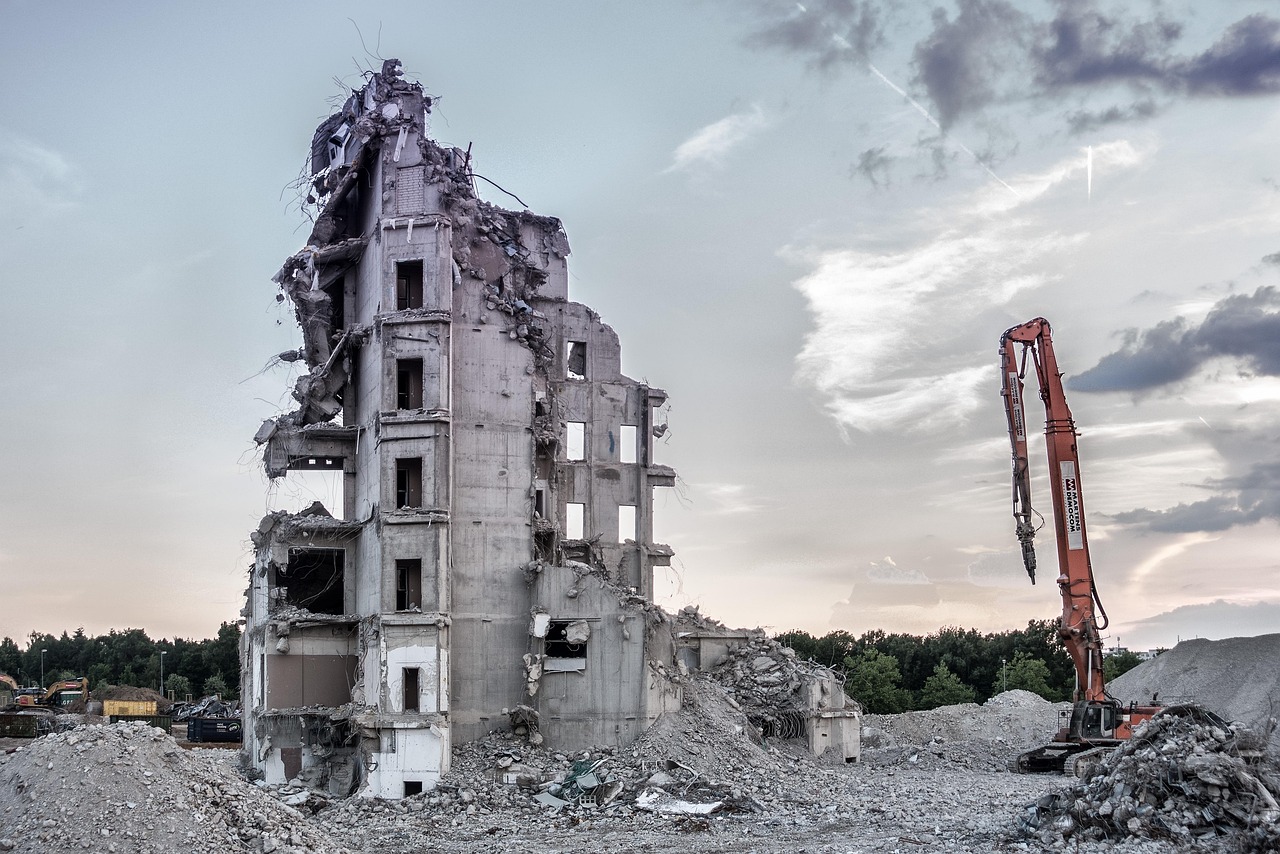
The volume and composition of disaster waste vary depending on the type of disaster, regional conditions and local development; typically, it consists of a mixture of building materials, household goods and various hazardous substances (Townsend & Anshassi, 2023; Fekete, 2025).
© Pixabay
Phases of Disaster Waste Management
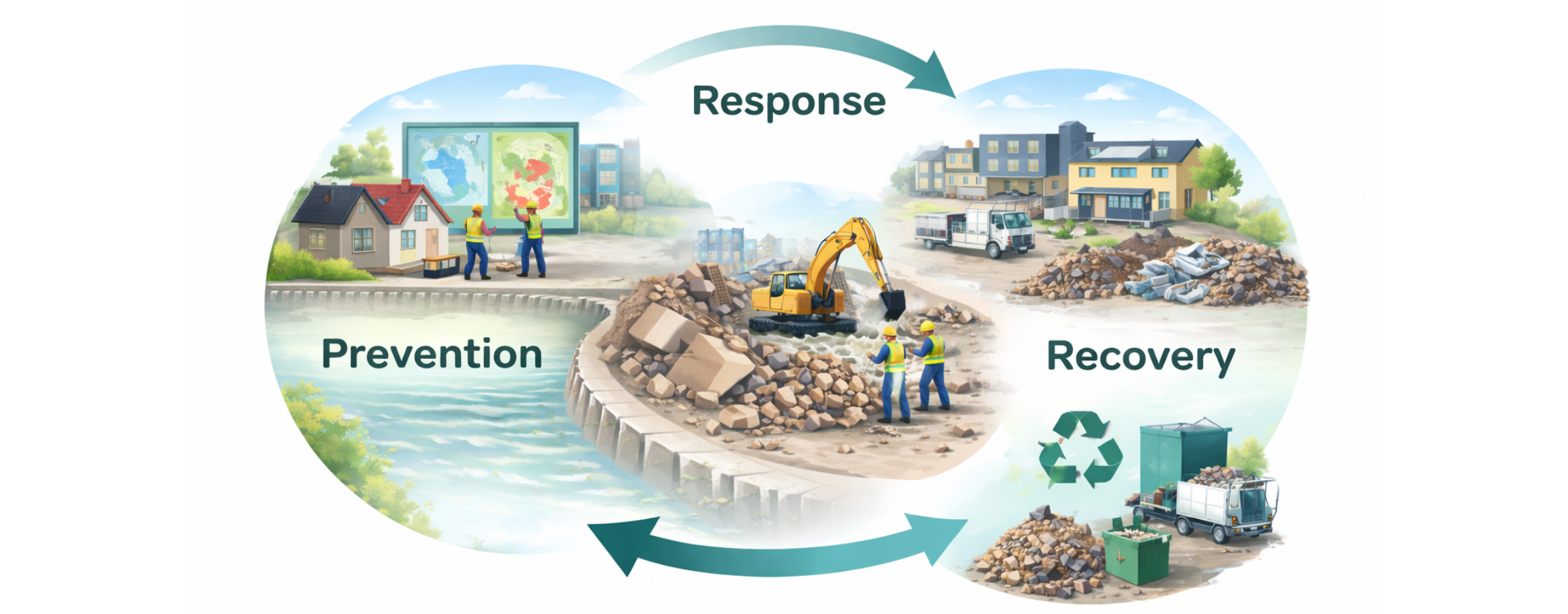
Disaster waste management can be categorised according to the three classic phases of disaster management: prevention, response and recovery (Phonphoton & Pharino, 2019).
Prevention and preparedness
The focus is on preventive measures aimed at reducing the volume and toxicity of potential waste from the outset. These include:
- Structural measures: e.g. more resilient construction methods, flood defences, floodplains, …
- Non-structural measures: e.g. adapted urban and spatial planning, educational programmes, risk maps, …
Response
Begins immediately after a disaster and is primarily characterised by emergency aid and support. These include:
- Clearing of debris from main transport routes as quickly as possible (to enable rescue operations)
- Ongoing assessments of the type, quantity and locations of waste
- Establishment of temporary storage sites, as well as the collection and removal
- Identification and separation of hazardous materials
In practice, time pressure, cost considerations and the need to ‘return to normality’ often result in waste being taken to landfill unsorted.
Recovery
Aims to improve living conditions and rebuild infrastructure. This phase also involves managing the majority of disaster waste.
- Short term: Rubble clearance; temporary waste storage sites (TDMS) are established (for sorting, recycling and disposal)
- Long-term: Implementation of waste management projects with the aim of transitioning systems to regular and improved waste management
- Special focus: Recycling and reuse → to save landfill space and reduce costs
These processes are supplemented by volume reduction measures (shredding, incineration).
Sustainable approaches are increasingly based on the principles of the circular economy and industrial ecology.
The duration of the reconstruction phase can vary enormously and extend over several years (e.g. Hurricane Katrina), with planning and financing problems frequently leading to delays.
© AI-generated
Digression: Natural hazards and the waste they generate
 |
Earthquakes |
Buildings collapse ‘in situ’, meaning that floor slabs collapse on top of one another and bury waste within damaged buildings and structures. This can make it difficult to separate ordinary waste (e.g. construction rubble) from hazardous waste (e.g. asbestos). Collapsed buildings can overlap across roads, thereby hindering access for search, rescue and relief operations. The volume of waste is high in comparison to other disasters, as the entire contents of the building generally become waste.
|
 |
Floods |
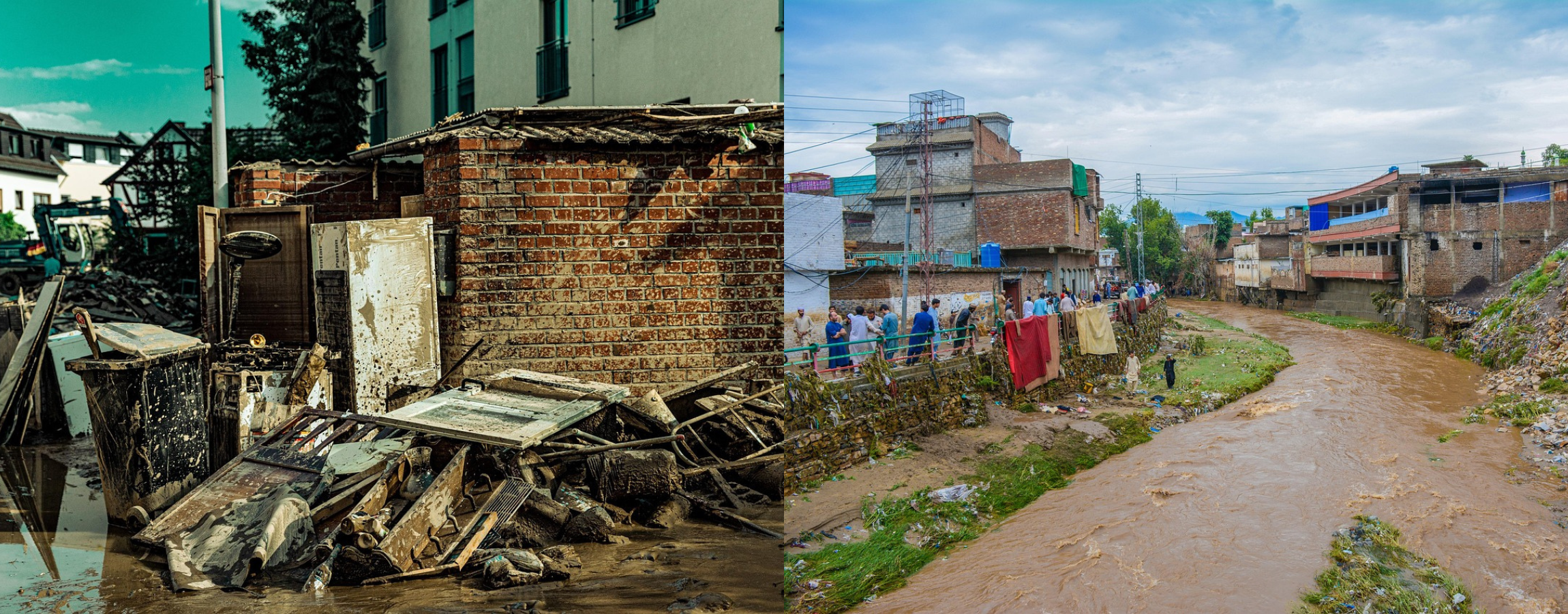
The initial damage depends on the structural integrity of the infrastructure. Severe damage can occur subsequently; mould may form and wood and other materials may begin to rot. Waste residues are often mixed with hazardous substances, such as oil, chemicals (e.g. household cleaning products) or electronic devices. Flooding can cause mud, silt and gravel to enter the affected areas, making access difficult once the water has receded. In some cases, clearance is necessary before relief and reconstruction efforts can even begin.
|
 |
Tsunamis |
Powerful tsunamis can cause extensive damage to infrastructure and scatter debris across large areas. The debris is often mixed with soil, trees, shrubs and other loose objects such as vehicles. This complicates the disposal and sorting of the waste.
|
 |
Volcanoes |
The damage caused results primarily from the deposition of ash and pumice in conjunction with lava flows. The clearance of debris is often hampered by fine ash particles, which place an additional strain on mechanical, electronic or hydraulic equipment.
|
 |
Storms |
Strong winds can tear the roofs off buildings, causing walls to collapse. Poorly constructed houses and huts can collapse under their own weight. Debris is scattered across open ground, roads and market squares. This includes roofing materials, small objects and dust. This becomes particularly problematic if asbestos is present. Power and telephone lines, as well as transformers, can be destroyed. This is not a major waste-producing factor in the immediate aftermath; however, in the longer term, it can again prove to be a significant disruptive factor.
|
Challenges
The challenges facing the DWM are enormous. Despite theoretical approaches and practical experience, situations become highly complex when a crisis strikes. This affects organisational, logistical, financial, social and environmental aspects. These aspects are further exacerbated by the fact that decisions often have to be made under considerable time pressure and with limited resources. Consequently, in the event of a disaster, the resulting waste regularly overwhelms existing waste management systems (Joint UNEP/OCHA Environment Unit, 2013).
Logistical challenges
One of the biggest challenges is the sheer volume of waste generated. The amount of waste can be five to fifteen times the annual volume produced by a local authority, which quickly overwhelms existing landfill capacity. For example, Hurricane Katrina generated more than 100 million tonnes of waste and debris, and even in the Ahr Valley in 2021, around 300,000–400,000 tonnes of flood waste were produced. These logistical problems lead to further complications: roads are blocked by the enormous volumes, waste has to be reloaded several times (‘double handling’), and finding suitable storage and sorting sites proves difficult. Furthermore, there is a tension between the desire for rapid normalisation and sustainable practices (recycling); these are often overlooked in favour of short-term solutions.
(Brown et al., 2011; Amato et al., 2020; Maxwell & Matsler, 2023)
Composition and Hazardous Substances
The composition of the various types of waste also poses a serious problem. Disaster waste often consists of mixed and contaminated materials such as construction rubble, household goods, sludge, hazardous substances and animal carcasses, which makes sorting and recycling difficult. Particularly dangerous are released pollutants; asbestos, chemicals or electronic waste containing toxic components such as lead or mercury can enter the soil and cause ecological damage there, or lead to health problems upon contact with humans. In addition to this mixed composition, there is also indirect waste resulting from emergency measures (e.g. packaging materials, spoiled food, waste from emergency shelters, etc.).
(Brown et al., 2011; Zhang et al., 2019; Naderi et al., 2025)
Legal Framework and Responsibilities
A key problem lies in the lack of clearly defined processes and responsibilities prior to an incident. In many countries, there are hardly any binding structures — or fragmented institutional structures and unclear divisions of responsibility make it difficult to integrate and implement disaster and emergency management. Cooperation between authorities, businesses and NGOs requires a high degree of coordination, but is further complicated by the institutional separation between regular waste management and disaster management. In practice, these separate administrative and responsibility structures lead to delays, conflicts of jurisdiction and inefficient use of resources. Legally binding frameworks at national level are often lacking or are limited to technical aspects. Added to this are regulatory hurdles in establishing temporary storage sites (the ‘not-in-my-backyard’ attitude) or strict environmental laws, which can further delay the process.
(Brown et al., 2011; Caldera et al., 2025; Naderi et al., 2025)
Costs and Financing
From a financial perspective, disaster waste management is extremely challenging. The disposal of disaster waste can account for up to a third of the total costs incurred by an incident. For example, the total expenditure for the Ahrweiler Waste Management Authority (as of October 2021) was estimated at approximately 105–115 million euros. Following the earthquake in Japan (2011), the disposal costs for disaster waste and tsunami sediments amounted to approximately 8.13 billion euros. In addition to the direct costs of transport, storage, treatment and disposal, a key challenge lies in the process of cost reimbursement. Financing mechanisms such as the German Special Reconstruction Fund or the EU Solidarity Fund (EUSF) are essential, but they tend to favour cost-effective options. As a result, sustainable strategies are often disadvantaged.
(Brown & Milke, 2016; Sasao, 2016; EUWID Recycling & Entsorgung, 2021; Naderi et al., 2025)
Environmental and health risks
Disaster waste can pose significant environmental and health risks. Improper storage, sorting or disposal can lead to the release of hazardous substances such as asbestos fibres, heavy metals or chemicals (see Composition). Contamination of soil and aquifers can occur following incidents, particularly due to oil-containing residues, chemicals or damaged sewage systems. For emergency services personnel and local residents, health risks such as skin irritation, respiratory diseases and infections are possible, particularly if protective equipment is lacking during clean-up operations. In the long term, environmental damage caused by uncontrolled dumping and inadequate waste separation can significantly delay ecological recovery.
(Brown et al., 2011; Zhang et al., 2019; Naderi et al., 2025)
Social and Psychosocial Aspects
Disasters never cause only physical damage; they can also have an immediate traumatic effect on those affected. Visible, uncontrolled waste can serve as a constant reminder of the losses suffered and hinder psychological recovery. Rapid clearance therefore contributes significantly to social stabilisation. Furthermore, disasters and their aftermath generally exacerbate existing social inequalities. Waste facilities are often located in disadvantaged communities, which are disproportionately affected by the burden of waste disposal. Affected population groups and communities often have less political clout and fewer resources to defend themselves against additional burdens or to participate in decision-making processes regarding waste management, which further entrenches existing inequalities.
(Zhang et al., 2019; Maxwell & Matsler, 2023; Matsler & Maxwell, 2025)
© l.: pixabay | r.: pixabay
Research gaps
The key research gaps in disaster and waste management include a lack of quantitative and holistic assessment of sustainable practices. There is a lack of standardised methods for accurately predicting waste volumes in different disaster scenarios. Furthermore, research often neglects organisational aspects, such as institutional mechanisms, the distribution of roles and the necessary integration of waste management into overall disaster preparedness. There is also a shortfall in the investigation of socio-economic factors, particularly effective financing mechanisms and their dependence on funding guidelines. Social aspects – such as the psychological impact of flawed waste management on those affected and aid workers – are also insufficiently quantified and researched. Furthermore, there is a lack of quantitative methods for assessing the feasibility and effectiveness of recycling and waste treatment options following disasters (Jalloul et al., 2022; Caldera et al., 2025).

© KI-Generiert
Case Study Ahr Valley
The flood disaster in the Ahr Valley in July 2021 is regarded as the most damaging event in Germany since the Hamburg storm surge of 1962. It serves as a striking example of how the phases and challenges of disaster waste management described above manifest themselves under real-life crisis conditions. This extreme event highlighted that disaster waste is not merely a logistical problem for the aftermath, but can constitute a hazard in its own right even during the acute response phase.
People affected
approx. 42,000
Loss of livelihood
approx. 17,000 households
Heavy rainfall
up to 150 l/m² in 24 hours
Waste volume
approx. 300,000 tonnes*
Duration
5.5 months of waste management
*equivalent to roughly 40 times the volume of bulky waste generated in a typical year
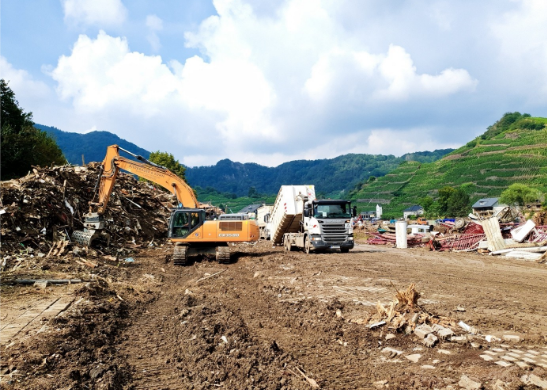
Collection point and transfer station for flood waste in the Ahr Valley, Dernau (December 2021)
© T. Schwarz
In the Ahr Valley, it became clear that waste management in major disaster situations is structurally subordinate and conceptually inadequately prepared. A lack of clear responsibilities, insufficient integration of waste management into the crisis management teams, and inadequately planned interim storage capacities meant that disaster waste developed into a separate operational and health hazard. The management of the waste generated therefore had to be carried out under considerable time pressure and with improvised solutions.
Key challenges in the Ahr Valley
Lack of preparedness and planning
In the Ahr Valley, it became clear that there was no national or cross-state strategy for the disposal of disaster waste. Waste management was organisationally subordinate to emergency response and was not systematically integrated into contingency planning. Appropriate structures and procedures therefore had to be developed during the crisis itself.
Logistics and temporary storage
The sheer volume of waste generated overwhelmed existing structures within a very short time. After just one day, the local buffer and temporary storage capacities that had been set up beforehand were exhausted. It was only through subsequent logistical adjustments, including changes to traffic management, that the removal of waste could be gradually stabilised.
Composition and hazardous nature of the waste
The disaster waste was heavily mixed and often contaminated, including with sludge, oils, batteries and other hazardous substances. This composition posed a hazard in its own right and made both sorting and material recycling considerably more difficult. At the same time, it increased environmental and health risks for emergency services and the general public.
Organisation and responsibilities
During the acute phase, waste management was not established as part of the traditional ‘rescue’ network. Clear responsibilities and communication channels were lacking, meaning that coordination often had to take place informally. Managing the volume of waste was therefore heavily dependent on individual initiative and ad hoc organisation.
Communication and information
In the initial phase, there was considerable communication chaos, accompanied by misinformation among the public. Direct and active communication from the management of the waste management company proved crucial in managing expectations, explaining procedures and building trust.
Managing the volume of waste in the Ahr Valley would not have been possible without the extraordinary commitment of the waste management company’s staff. Around 80 internal staff members, some of whom were themselves affected by the flooding, worked under extreme pressure, in some cases for up to 14 hours a day, and clocked up a total of over 6,500 hours of overtime. Despite high levels of physical and mental strain, as well as the feeling of not being recognised administratively as part of the actual emergency response, they kept operations running and organised key processes independently. They were supported in this by a nationwide waste disposal network, which was mobilised through direct appeals and made a significant contribution to the response.
Lessons Learned
1.) Early involvement of waste management
- Waste management experts must be part of the crisis management team
- The waste situation persists beyond the acute phase
2.) Proactive planning of interim storage capacity
- Identify sites in advance
- Consider logistical scenarios
3.) Traffic management as a performance factor
- One-way traffic schemes
- Optimisation of lorry handling
4.) Active risk communication
- Direct communication by responsible authorities
- Early countermeasures in the event of misinformation
5.) Harnessing the potential of the circular economy
- Innovative recycling methods are possible even during a crisis
- Sustainability ≠ luxury, but rather functional
Created: January 2026
Current Information
New Topic Page Disaster Waste Management
The DKKV’s topic pages provide scientifically sound and visually engaging coverage of key topics in the fields of natural hazards and civil protection, as well as various approaches, concepts, crises and other risks. Following the coverage of disaster waste management...