On 10 February 2026, tropical cyclone Gezani hit the east coast of Madagascar with wind speeds of up to 250 kilometres per hour, causing severe devastation. According to official reports, at least 31 people were killed and many more were injured. Several people are still missing. Hundreds of thousands of people have been affected.
Aerial photographs of the affected regions show collapsed buildings, destroyed warehouses, roofs torn off houses and uprooted trees. Entire swathes of land are under water, roads are flooded and impassable in many places. In addition to massive damage to residential and commercial buildings, power and telecommunications lines have also been disrupted. Rescue workers are still on duty, and thousands of people have had to be brought to safety.
The city of Toamasina on the east coast, with a population of around 400,000, has been particularly affected. According to the transitional government, large parts of the infrastructure there have been severely damaged.
In view of the extent of the destruction, the national government has appealed to the international community for assistance. Meteorologists expect the storm to lose intensity as it moves inland. Nevertheless, there is still an increased risk of flooding and landslides as a result of persistent rainfall. Due to its geographical location in the Indian Ocean, Madagascar is regularly exposed to tropical cyclones.
Recurring extreme weather events pose significant challenges for the country in terms of disaster preparedness, risk management and reconstruction.
Further information and current developments can be found here.
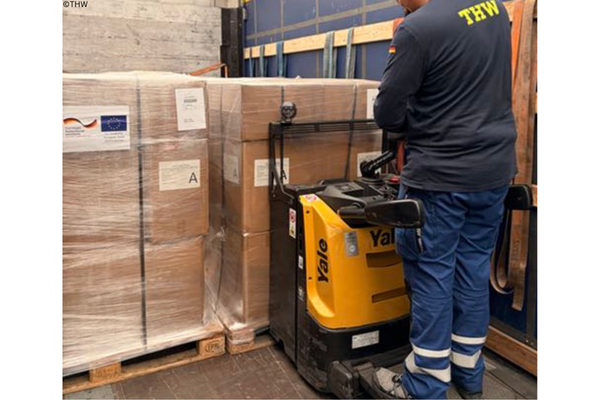
In light of the severe damage, the Technisches Hilfswerk (THW) has sent relief supplies to the affected population. As announced by the THW on 18 February 2026, the delivery includes around 300 family tents, more than 1,200 insulating mats, around 1,000 kitchen sets and 1,000 drip filters for drinking water treatment.
The relief supplies were assembled at the THW logistics centre in Bavaria. Madagascar had previously requested international assistance through the European Civil Protection Mechanism. The transport of the goods is being coordinated within the framework of this mechanism. The emergency aid measure is being financed by the Foreign Office.
THW President Sabine Lackner explained that the aid delivery was intended to make a targeted contribution to supporting the affected population. The THW is the German government’s volunteer-based civil protection organisation and provides national and international support on behalf of the German government in the event of natural disasters and other emergencies. Its range of activities also includes technical and logistical tasks within the framework of the European Union’s civil protection mechanism and on behalf of United Nations organisations.
These events once again highlight the importance of internationally coordinated disaster relief and resilient infrastructure and preparedness structures, especially in particularly exposed regions. The full press release can be read here.
(Image source: THW)