

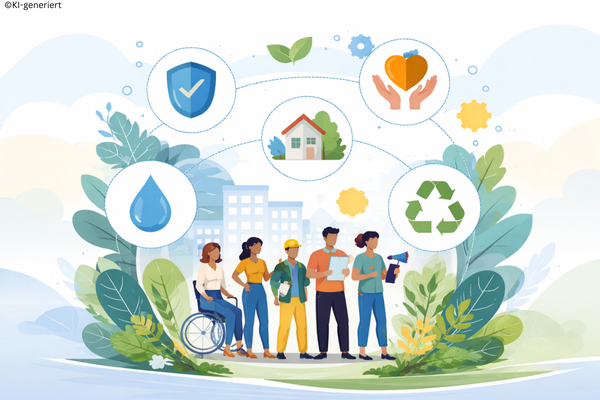
The UN Office for Disaster Risk Reduction (UNDRR) has published a new practical guide to strengthening community resilience. The Guidebook for Community Resilience is aimed at communities, local organizations, businesses, and engaged citizens, offering concrete approaches to better prepare for, respond to, and recover from crises and disasters.
The guidebook has been published against a backdrop of increasing climate-related extreme events and growing social and infrastructural vulnerabilities. It takes a community-oriented approach and emphasizes that resilience is not created by government measures alone, but through the interaction of local government, civil society, business, and the population.
Using practical examples from various regions, the publication shows how communities can identify risks, mobilize local resources, and strengthen cooperation. The guide offers concrete recommendations for action for different groups of actors – from neighborhoods and local initiatives to small and medium-sized enterprises and municipal decision-makers.
The central idea of the guide is to understand resilience as a continuous process that combines prevention, crisis management, and reconstruction and is embedded in local structures, decision-making processes, and everyday practices in the long term.
The Guidebook for Community Resilience is available free of charge via the PreventionWeb knowledge platform and is particularly suitable for stakeholders in the fields of disaster preparedness, civil protection, community development, and climate adaptation.
The complete guide can be found here.
(Image source: AI-generated)